
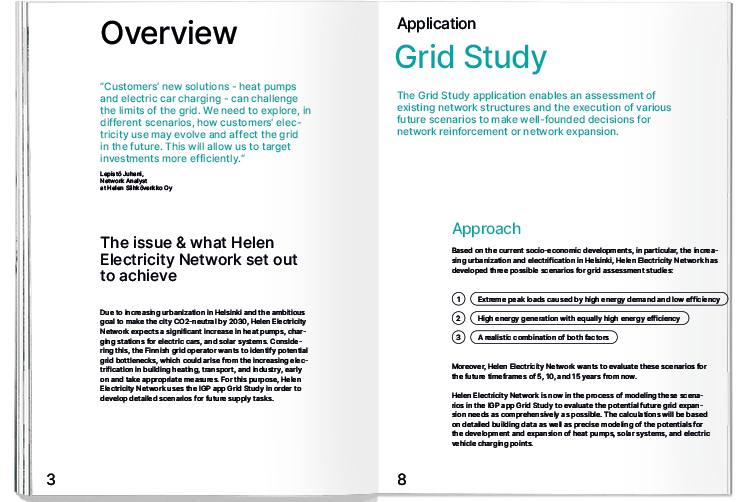
How do you build a strong data foundation to estimate the grid expansion and investment needs accurately?
Helen Electricity Network, a Finnish grid operator, shares their approach. Learn it firsthand 👉
Electrification is changing the distribution grid at pace. EV charging, heat pumps, distributed generation, storage and flexible demand are creating new peaks, reverse power flows and local constraints. Managing that capacity requires a sophisticated approach.
For DNOs preparing for RIIO-ED3 the challenge is not whether to build or whether to flex. It is to understand the network well enough to decide when to optimise existing capacity, when to use flexibility and when to reinforce. These options also need to work together over time, with clear benefits for consumers and the wider energy system.
Flexibility is the ability to change the timing, level or direction of generation, demand, storage or controllable network operation in response to system conditions. Assessed against a specific constraint, flexibility can reveal usable capacity that would otherwise remain hidden. It can help connect customers sooner, ease local constraints, absorb variable generation and demand, and defer reinforcement where technically and economically appropriate. Its value lies in managing existing capacity dynamically, rather than treating every constraint as a call for new investment.
Flexibility has traditionally been associated with network operations. In RIIO-ED2, this often meant using flexibility to manage local constraints and defer reinforcement. That experience has shown where flexibility can create value. But it also exposed its limit. Electric vehicles, heat pumps and distributed generation are adding demand and generation at a scale that changes the nature of constraints. They are becoming less occasional and local, and more sustained and widespread.
Flexibility can smooth and delay these pressures, but it cannot indefinitely substitute for capacity the grid does not have. At some point, sustained growth in demand or generation requires reinforcement, not further optimisation. A network enabling electrified heat and transport needs a strategic approach that combines flexibility with targeted, timely reinforcement.
RIIO-ED3 therefore moves towards a balanced “Build and Flex” approach. Flexibility remains important, but it should not delay necessary reinforcement beyond the point at which it can still be delivered in time. At the same time, DNOs are expected to release usable capacity from existing assets and avoid unnecessary upfront build where demand, technology uptake or peak behaviour remains uncertain.
A balanced “Build and Flex” approach depends on three principles:
Optimise existing capacity. Use flexibility and operational measures to make better use of existing network assets and manage uncertainty before committing to unnecessary upfront reinforcement.
Reinforce in time for credible need. Plan and deliver physical reinforcement when the need is sufficiently credible and flexibility alone would not provide a timely, resilient or cost-effective solution.
Adapt as evidence changes. Use forecasts, connection activity, monitoring and operational data to refine the timing, scale and balance of interventions as the evidence develops.
Under ED3, DNOs need to choose the right intervention early enough to keep the distribution network connection-ready and reliable. That means evaluating where existing capacity can be used more effectively, where flexibility is credible, and where reinforcement is needed in time.
Helsinki aims to become emission-free by 2030, necessitating a major transformation of its energy systems. This presents challenges for the power grid, requiring a thorough understanding of the impacts of these changes. Using the IGP app Grid Study, Helen Electricity Network is modeling three potential future grid scenarios. These scenarios, reflecting current and projected socio-economic developments, will help determine grid needs over the next 5, 10, and 15 years.
The “Build and Flex” approach in RIIO-ED3 evolves what it means to run a distribution system, by requiring network operators to take on a DSO function in practice. The DSO is no longer only a local constraint manager or an operator reactively handling conditions as they arise.
In practice, the DSO role asks for five capabilities:
However, these are not a set of isolated functions, but form an integrated capability that spans all five. Together, these capabilities must work across the wider energy system, while delivering consumer value through measurable benefits.
While Ofgem sets out the areas and expectations for the DSO role, it does not prescribe how to meet them. In practice, they rely on the same underlying resource: an integrated network model that reflects current topology, asset limits, connection activity, forecasts and operating conditions.
When the teams involved in planning and operating the grid work from the same picture of where capacity is constrained and how the network is performing, they can assess flexibility alongside reinforcement, coordinate action and demonstrate consumer value more effectively.
The practical question is then, how that understanding gets built, updated and used across every team that depends on it.
Meeting the active DSO role in practice means treating planning, coordination and operations as genuinely integrated — in effect, as one continuous decision cycle rather than as separate functions. Today, that is often held back by fragmented data, isolated teams and static planning assumptions. Connections, planning, operations and asset teams may each hold valid information about the network. But when that information sits in separate systems or is updated at different intervals, “Build and Flex” assessments become harder to compare, justify and repeat.
The Intelligent Grid Platform addresses this by providing a shared technical basis for the DSO function: a continuously updated digital twin of the distribution grid. Instead of treating a connection study, a reinforcement scenario, an operational constraint or a flexibility assessment as separate exercises, the IGP brings them back to the same grid model. That model can reflect topology, asset limits, connection activity, forecasts, monitoring data and operating conditions. Teams get a consistent view of available capacity, emerging constraints and technically credible interventions.

A complete, simulation-ready grid model is essential to run realistic scenarios, identify critical areas early, and prioritize investments efficiently.
Whether PV, EV charger, or heat pump – new connection requests can be evaluated directly within the digital twin, quickly and in full compliance with local regulations, without unnecessary manual effort.
Enriched with real-time measurement data, the digital twin becomes the operational backbone – supporting switching decisions, maintenance planning, and congestion detection.
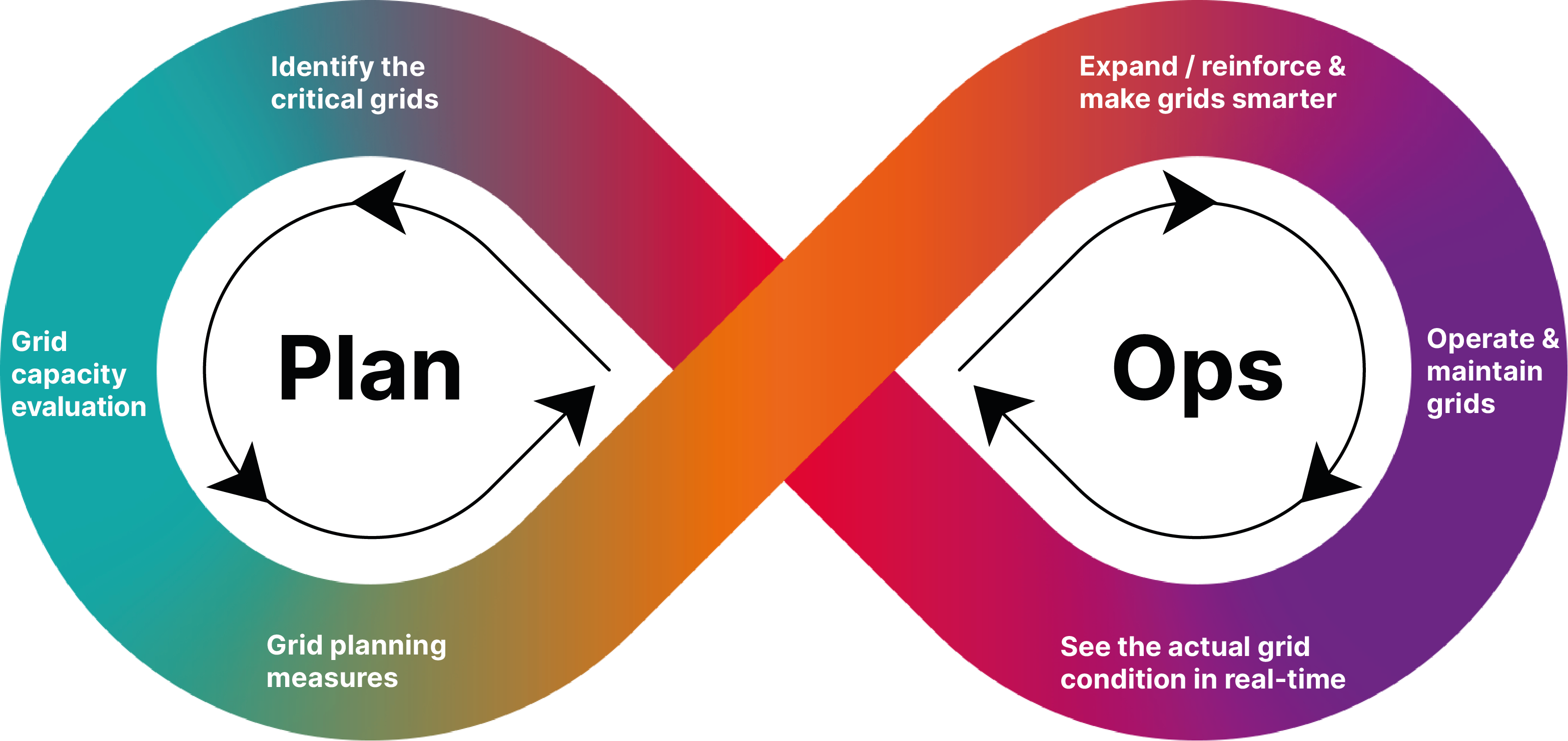
This is where the PlanOps approach comes into play, seamlessly integrating processes and consistently linking planning and operations through a shared, continuously updated grid model. Planning teams can test future demand, generation and reinforcement scenarios against current network conditions based on operational data, while connections teams assess applications against actual available and reserved capacity. Operations teams feed observed constraints, voltage issues and loading patterns back into planning, so that asset teams can prioritise reinforcement where flexibility, operational measures or existing headroom are no longer sufficient. PlanOps creates a continuous loop between these activities, feeding changing network conditions, operational actions and their effects back into the shared model to provide an updated basis for further planning and action.
For ED3, this matters because DNOs need to show that flexibility and reinforcement have been assessed on comparable terms. Flexibility may release usable capacity from existing assets, support earlier connections or defer reinforcement where it remains appropriate. Reinforcement may be the better option where growth is sustained, constraints are persistent or operational risk becomes too high. A shared digital twin gives DNOs a more reliable basis for making that distinction, rather than rebuilding the case from separate models each time.
For the active DSO, the value of PlanOps is not an additional layer of process. It is the ability to make capacity, flexibility and investment choices faster, clearer and easier to defend.
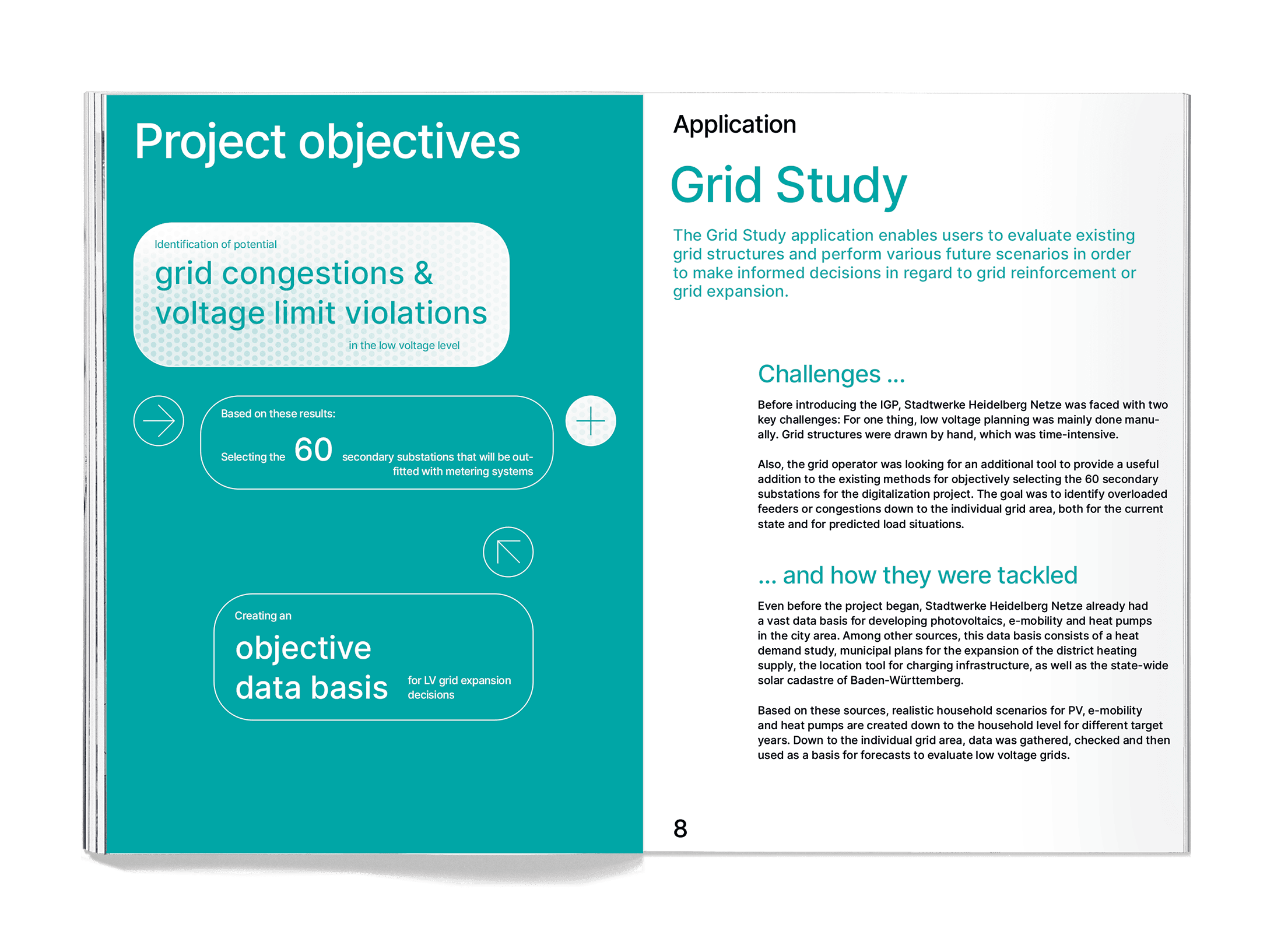
Stadtwerke Heidelberg Netze wants to strategically select and equip 60 secondary substations with metering systems. To make the selection based on data, the DSO wants to analyze the grid situation in the LV range under consideration of future developments such as PV expansion, e-mobility and heat pumps. To achieve this, they implemented the Grid Study app from the envelio IGP. Thanks to the fully automated process chain, grid simulations now run in under 15 minutes and deliver an objective data basis for pinpointing potential bottlenecks at the substation level.
Whether it’s grid connection checks, grid planning, or monitoring – experience in a personalized live demo how our platform helps you actively tackle the challenges of the energy transition.
Simply fill out the form and choose your preferred time slot – you’ll receive an instant confirmation email. Please note that we will check the availability of our team and may follow up with an alternative if no sales manager is available at the selected time.